Modern interior and exterior design decisions are no longer based only on appearance. Property owners, architects, and commercial developers now evaluate materials based on durability, maintenance requirements, lifecycle cost, moisture resistance, and long-term performance. This shift in buying behaviour is one of the main reasons WPC wall panels have become increasingly popular across residential homes, retail spaces, hotels, offices, and commercial developments. At first glance, WPC wall panels may appear more expensive than conventional wall finishes such as paint, wallpaper, MDF, or PVC panels. That higher upfront cost often creates hesitation among buyers who compare materials purely on initial pricing. However, the real financial value of a wall system is not determined by what it costs on day one. It is determined by how much money, time, and maintenance it demands over the next 10 to 20 years.
This is where WPC wall panels stand out. While the initial investment is higher, they often reduce long-term maintenance costs, minimise repairs, and maintain their structural and visual quality far longer than traditional alternatives. For homeowners and commercial property owners looking for durability and reduced upkeep, WPC panels frequently become the more economical choice over time. This is also why discussions around WPC wall panel maintenance cost have become increasingly common among architects and homeowners planning long-term projects.
1. Understanding What WPC Wall Panels Are
WPC stands for Wood Plastic Composite, a material created by combining wood fibres with thermoplastics and specialised additives. The result is a composite panel that delivers the visual warmth of wood while offering better resistance to moisture, termites, and environmental wear. Traditional wood has always been valued for its appearance, but it comes with several long-term problems. Wood can warp in humid conditions, absorb moisture, crack over time, and require repeated polishing or sealing. WPC panels were developed to overcome these issues while still preserving the textured and premium appearance associated with wooden interiors.
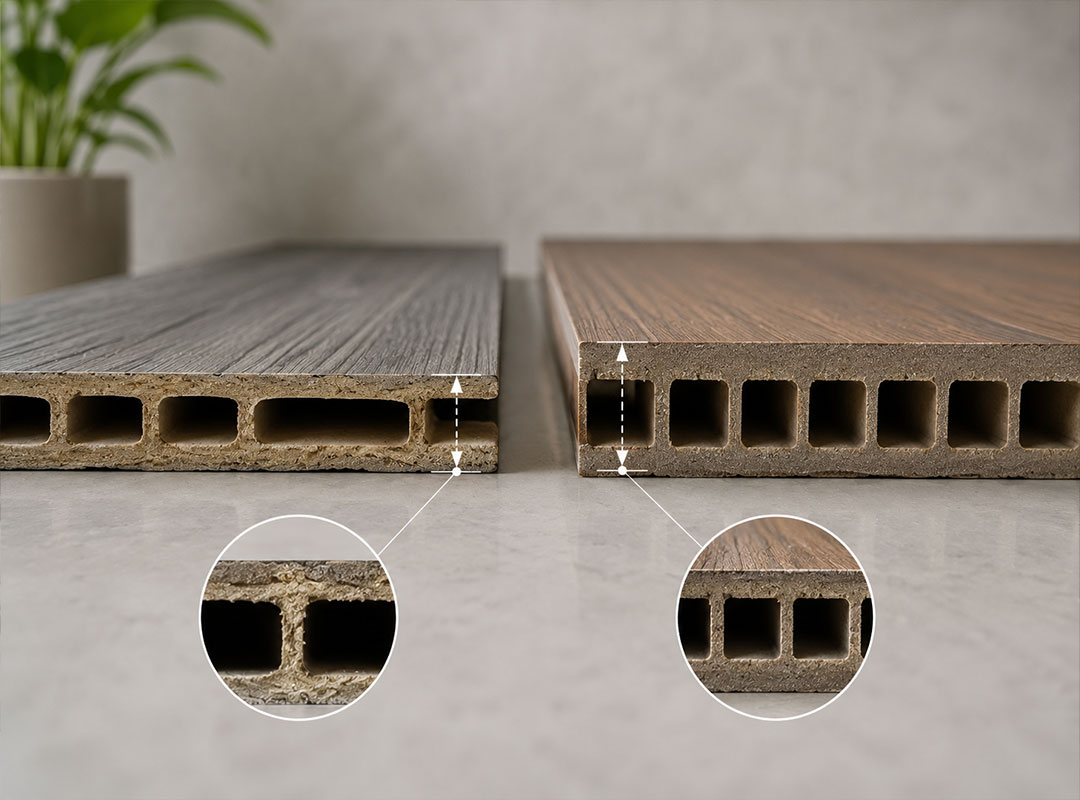
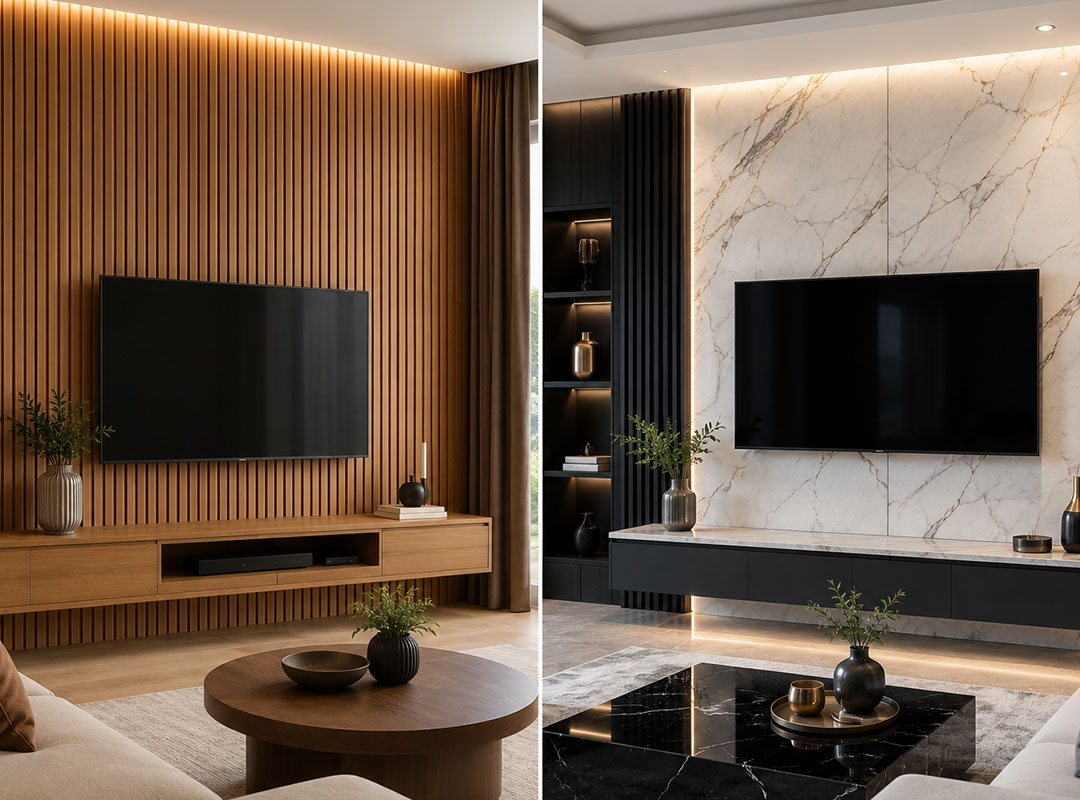
Compared to standard PVC panels, WPC panels are also structurally stronger and visually more refined. They provide better rigidity, a more natural finish, and improved durability under daily use. This combination of aesthetics and performance has made them increasingly common in feature walls, hotel interiors, office spaces, retail environments, balcony cladding, and even exterior facades. Many designers now recommend them as durable wall panels for interiors because they combine visual appeal with long-term reliability.
The rising demand for WPC is not simply a design trend. It is largely driven by the need for materials that maintain their appearance without generating continuous maintenance expenses. Buyers are also increasingly researching WPC wall panel lifespan before choosing wall materials because longevity now plays a major role in construction planning.
2. The Biggest Mistake Buyers Make When Comparing Costs
One of the most common mistakes people make when evaluating wall materials is focusing only on the purchase price per square foot. This creates a misleading comparison because wall finishes are long-term assets, not short-term purchases.
Paint may appear inexpensive initially, but it usually requires repainting every few years. Wallpaper can peel or stain, especially in humid environments. MDF panels may swell when exposed to moisture, while natural wood requires periodic polishing, sealing, and termite treatment. All of these recurring expenses add up over time. WPC panels shift the cost structure entirely. Instead of demanding lower upfront spending and higher maintenance later, they involve a higher initial investment but significantly lower recurring costs. This difference becomes more obvious over long ownership periods.
A homeowner may repaint walls three or four times within the lifespan of a quality WPC installation. A commercial property owner may repeatedly spend on repairs, labour, and refurbishment while WPC panels continue to perform with minimal intervention. When maintenance cycles are included in the calculation, the apparent price difference between WPC and traditional materials becomes much smaller than most buyers initially assume. This is one reason why understanding WPC wall panel maintenance cost is more important than simply comparing upfront pricing.
3. Why Long-Term Cost Matters More Than Initial Price
The real value of WPC panels becomes clear when analysing lifecycle cost rather than upfront expenditure. Lifecycle cost refers to the total amount spent on a material over its entire usable lifespan, including repairs, maintenance, labour, replacement, and upkeep.
Many lower-cost wall materials become expensive over time because they deteriorate faster and require repeated maintenance. Paint fades, chips, and stains. Wallpaper peels. Wood panels may crack or warp. Moisture damage often leads to repairs that extend beyond the wall surface itself.
WPC panels reduce many of these recurring issues because they are engineered for stability and durability. Properly manufactured WPC systems can maintain their appearance and structural integrity for 15 to 30 years depending on environmental conditions and installation quality. A longer WPC wall panel lifespan directly reduces replacement frequency, which significantly improves long-term value. This longevity changes the economics completely. Instead of repeatedly spending on surface restoration, repainting, or panel replacement, owners deal primarily with simple cleaning and basic upkeep. In commercial spaces, this is especially important because maintenance involves more than material cost. It also includes labour coordination, downtime, operational disruption, and inconvenience to occupants or customers. For hotels, offices, retail stores, and commercial buildings, reducing maintenance frequency directly improves operational efficiency and lowers long-term expenses. This is exactly why WPC products are increasingly chosen as durable wall panels for interiors in high-traffic environments.
4. Maintenance Is Where WPC Panels Deliver the Most Value
The strongest financial advantage of WPC wall panels lies in their low-maintenance nature. Traditional wall systems often require constant attention to preserve their appearance and functionality. WPC panels significantly reduce that burden. One of the biggest reasons for this is their moisture resistance. Unlike MDF or untreated wood, WPC panels do not absorb water easily. They resist swelling, warping, and rotting even in humid environments. This makes them highly suitable for kitchens, bathrooms, balconies, and coastal properties where moisture exposure is unavoidable. In tropical climates, moisture-related wall damage is one of the most common causes of premature material failure. Paint begins to bubble, wood expands, and laminates detach from the surface. WPC panels are designed specifically to withstand these environmental stresses, which reduces repair frequency substantially. Lower repair frequency naturally reduces overall WPC wall panel maintenance cost over the long term.
Cleaning requirements are also minimal. Most WPC panels only need occasional wiping with a soft cloth and mild detergent. There is usually no need for repainting, sanding, sealing, polishing, or protective coating applications. Over a period of years, the savings in labour and maintenance products become significant. Another major advantage is termite resistance. Traditional wood-based wall systems are highly vulnerable to termite infestation, particularly in humid regions. Treating termite damage is expensive and often requires replacing entire sections of wall panelling. WPC’s composite structure provides much stronger resistance against termites and fungal deterioration, reducing both risk and future repair costs.
5. Durability Is the Core Reason WPC Panels Are Growing in Popularity
Durability is one of the primary reasons WPC panels have moved beyond residential interiors into commercial and architectural applications. Modern buildings experience continuous wear, especially in high-traffic environments. Materials that fail quickly create ongoing operational and financial problems. WPC panels are engineered to handle moisture fluctuations, temperature changes, impact, and regular surface contact without deteriorating rapidly. High-quality panels often include UV stabilisers and protective surface technologies that help preserve colour consistency and structural stability over long periods. This extended WPC wall panel lifespan is one of the biggest reasons property owners are willing to invest more upfront.
This durability becomes particularly valuable in commercial environments such as hotels, office corridors, restaurants, and retail stores where walls are exposed to constant usage. Repainting or replacing wall systems repeatedly is not only expensive but also disruptive to business operations. A durable wall solution reduces refurbishment frequency and maintains visual consistency for years. This is one of the key reasons many hospitality and commercial projects are increasingly adopting WPC instead of conventional decorative wall systems. Their performance has made them one of the most preferred durable wall panels for interiors across modern commercial spaces.
6. Installation Efficiency Also Impacts Overall Cost
Installation is another factor that significantly affects the true cost of a wall system. Traditional wall finishing methods often involve multiple stages including surface preparation, primer application, levelling, painting, drying, and finishing. These processes increase labour costs and extend project timelines. WPC panel systems are comparatively faster and more streamlined to install. Many modern systems use modular installation methods that simplify alignment and mounting. Faster installation reduces labour dependency and shortens project completion time.
For commercial projects, time savings can have direct financial implications. A faster installation process can reduce business downtime, accelerate occupancy schedules, and minimise disruption during renovation projects. This operational efficiency is often overlooked when comparing materials purely based on purchase price. However, lower labour dependency and reduced future repairs positively impact overall WPC wall panel maintenance cost over the life of the installation.
7. Indoor and Outdoor Performance
Another reason WPC panels are considered a long-term investment is their versatility across both indoor and outdoor applications. However, it is important to understand that indoor-grade and outdoor-grade WPC panels are manufactured differently. Indoor installations typically experience stable temperatures and lower environmental stress. In these conditions, quality WPC panels can maintain performance for decades with very little maintenance. This long WPC wall panel lifespan makes them highly suitable for homeowners seeking lasting interior solutions.
Outdoor environments are much more demanding because panels are exposed to rain, UV radiation, pollution, and temperature fluctuations. Exterior-grade WPC systems are designed with enhanced weather resistance technologies to handle these conditions effectively. When properly manufactured and installed, exterior WPC panels can still achieve very long service lives while requiring significantly less maintenance than natural wood cladding systems.
8. Is WPC Better Than PVC?
PVC panels are often compared directly with WPC because they are usually cheaper. While PVC can work well for low-cost interior applications, it generally lacks the premium appearance and structural strength associated with WPC. WPC panels offer better rigidity, improved impact resistance, and a more natural wood-like finish. They also tend to feel more solid and refined in high-end interiors. PVC may satisfy short-term budget requirements, but WPC usually delivers stronger long-term value in spaces where both aesthetics and durability matter.
This distinction becomes especially important in premium residential and commercial projects where appearance quality directly influences perceived property value. For many architects and designers, WPC has become the preferred choice for durable wall panels for interiors because it balances functionality with aesthetics.
9. The Importance of Product Quality
Not all WPC panels perform equally. Product quality plays a massive role in determining durability, colour stability, and long-term performance. Low-quality panels may suffer from fading, brittleness, expansion issues, or surface deterioration within a relatively short period. The composition ratio, manufacturing process, UV protection system, and raw material quality all affect performance outcomes. This is why choosing WPC panels purely based on the lowest quotation can become a costly mistake later. High-quality manufacturing standards are essential if the goal is to achieve genuine long-term savings and durability. Better manufacturing quality also contributes directly to longer WPC wall panel lifespan and more stable performance.
Proper installation is equally important. Even premium panels can underperform if they are installed incorrectly or used in unsuitable environments.
10. Are WPC Wall Panels Worth the Investment?
For most long-term residential and commercial applications, WPC wall panels are absolutely worth the investment. They are not the cheapest wall solution available, nor are they intended to be. Their value comes from long-term durability, lower maintenance requirements, moisture resistance, and reduced repair frequency. Over time, these advantages often offset the higher upfront cost and create better overall financial value. For homeowners, WPC panels reduce the ongoing burden of repainting, repairs, and moisture-related damage. For commercial properties, they help lower maintenance expenditure, minimise operational disruption, and maintain consistent aesthetics for years. Reduced WPC wall panel maintenance cost is one of the strongest reasons they continue gaining popularity across modern projects.
The real question is not whether WPC panels cost more initially. The real question is whether cheaper materials truly remain cheaper after years of maintenance, repairs, and replacement cycles. In many cases, they do not. When evaluated from a long-term ownership perspective, WPC wall panels are less of an expense and more of a strategic investment in durability, efficiency, and sustained visual quality. Their extended WPC wall panel lifespan and reputation as durable wall panels for interiors make them a practical solution for both residential and commercial spaces.