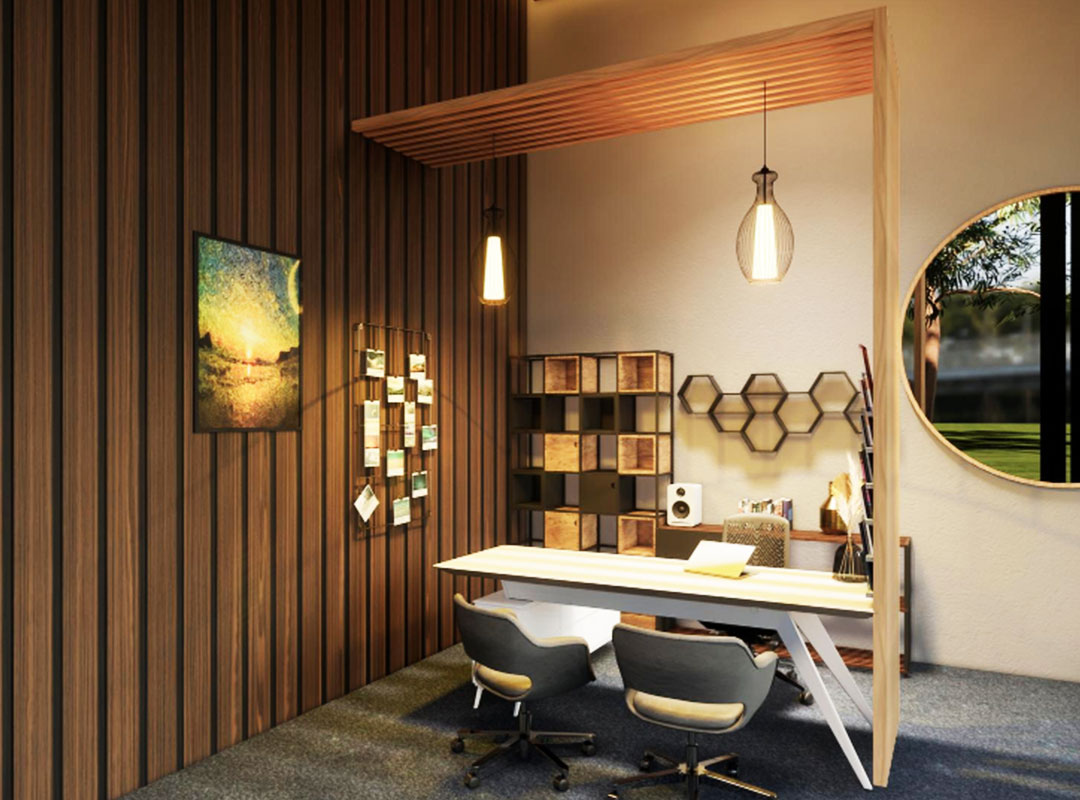
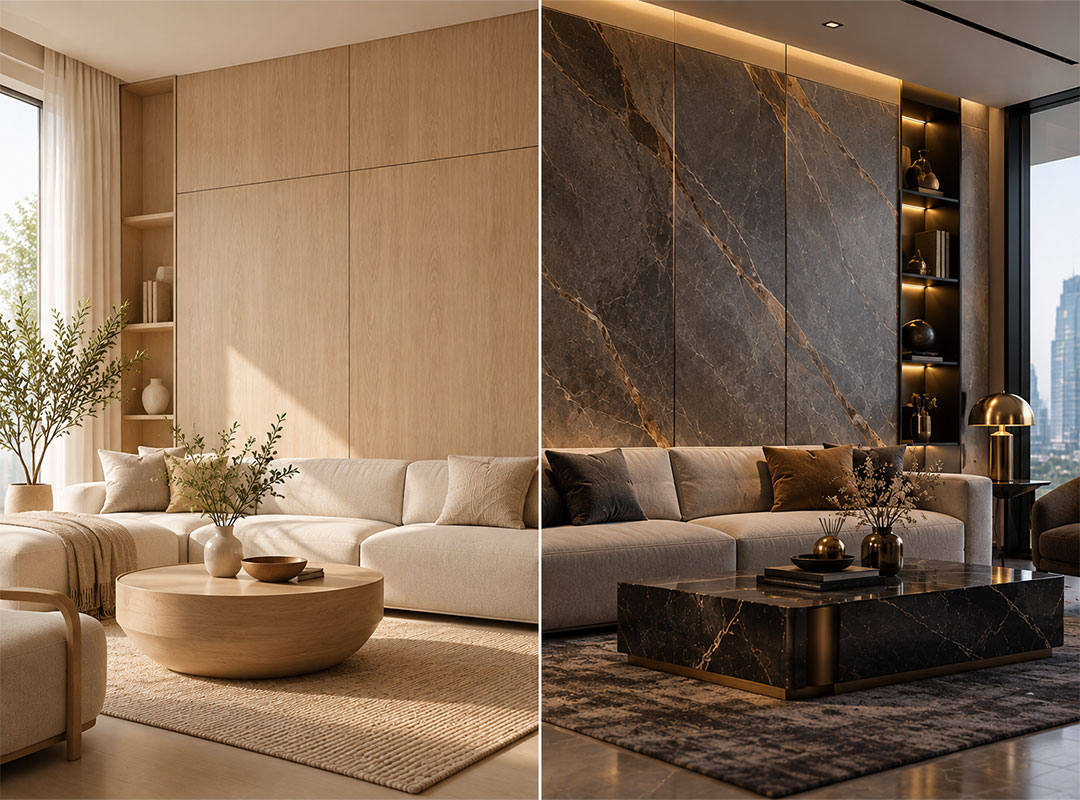
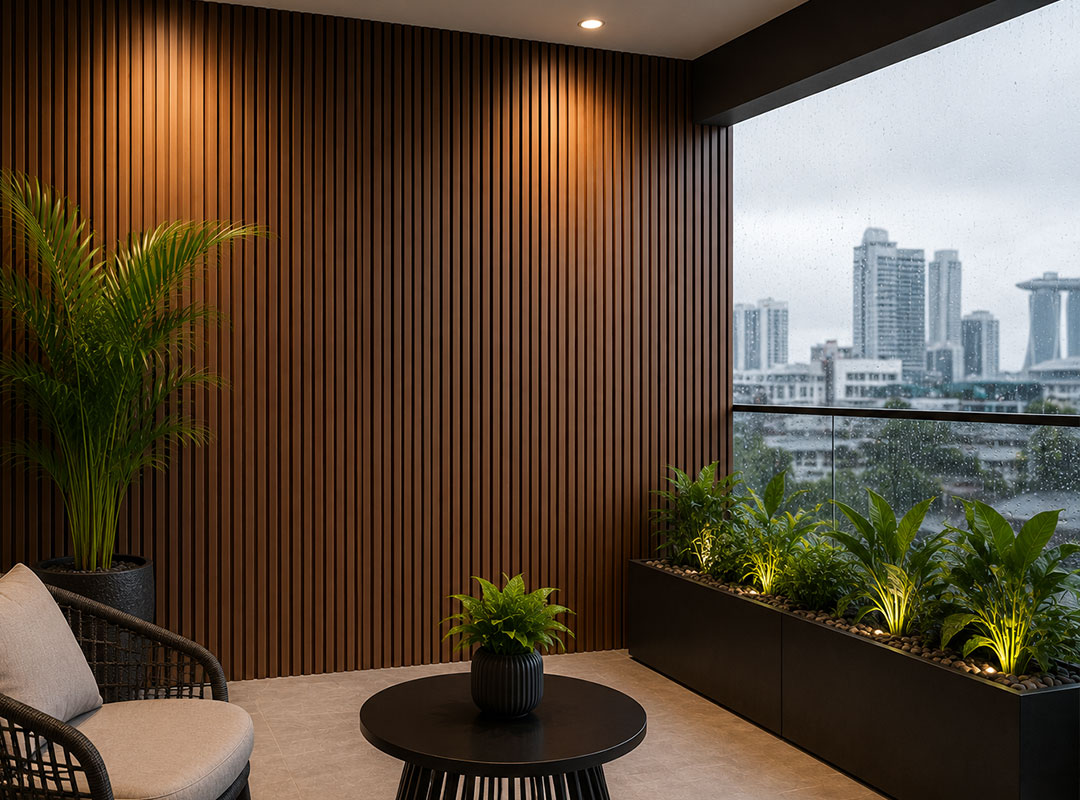
A beautifully designed wall panel can lose much of its visual appeal under poor lighting, while the right illumination can turn even a subtle design into the focal point of a room. In modern interior design, lighting is no longer treated as a finishing touch added after the wall panels are installed. It is a critical design element that influences how textures, colours, finishes, and dimensions are perceived.
Whether in luxury residences, hotel lobbies, corporate offices, retail stores, or hospitality spaces, decorative wall panels and lighting work together to shape the overall ambience of an interior. The same textured wall panel can appear warm and inviting under soft illumination, sophisticated under indirect lighting, or dramatic under directional spotlights.
The interaction between light and surface determines how materials are experienced by the human eye. Proper lighting can enhance texture, reveal intricate details, create depth, and even alter the perceived size of a room. Conversely, poor lighting can flatten surfaces, distort colours, and diminish the premium appearance of architectural wall panels.
For this reason, designers increasingly consider wall panels and lighting as a unified design strategy. Understanding how lighting affects the appearance of wall panels allows homeowners, architects, and interior designers to create spaces that are visually compelling, functional, and capable of delivering a stronger architectural impact.
1. Grazing Light Reveals Texture and Creates Depth
Textured wall panels are designed to create dimensional interest, but their full visual impact only becomes evident under appropriate lighting, which is why understanding the best lighting ideas for textured wall panels is essential during the design process. Grazing light, where fixtures are positioned close to the wall and direct light parallel to the surface, casts subtle shadows that emphasise grooves, ridges, and three-dimensional patterns. This technique is widely used in feature wall panels, stone finishes, and wood-grain surfaces because it transforms a flat-looking installation into one that feels tactile and architecturally expressive.
2. The Direction of Light Changes the Character of Wall Panels
The placement of lighting fixtures significantly affects how interior wall panels are perceived. Front lighting produces a clean and uniform appearance by minimising shadows, while side lighting increases contrast and highlights surface variations. Down-lighting creates a refined and focused effect that works particularly well in reception areas and bedrooms, whereas up-lighting adds drama and makes walls appear taller. Simply changing the direction of illumination can completely alter the mood and visual weight of a wall panel installation.
3. Colour Temperature Determines the Atmosphere of a Space
Colour temperature, measured in Kelvin (K), influences both the mood of a room and the appearance of wall panels. Warm white lighting between 2700K and 3000K enhances timber finishes and creates a comfortable, residential atmosphere. Neutral white lighting around 4000K offers balanced illumination suitable for offices and commercial spaces. Cooler lighting above 5000K provides a crisp, contemporary appearance but can reduce the warmth of natural materials. Selecting the right colour temperature ensures decorative wall panels convey their intended character and complement the surrounding interior.
4. Lighting Changes the Perception of Colour
The colour of a wall panel is never perceived in isolation. It is highly dependent on the spectral qualities of the light source illuminating it. Beige panels may appear cream under warm lighting and slightly grey under cooler illumination. Dark-coloured panels often gain richness and depth when accent lighting is applied, while lighter finishes appear brighter and more spacious under evenly distributed lighting. Evaluating wall panels under their intended lighting conditions is therefore essential during the design process.
5. Colour Rendering Index (CRI) Impacts Material Authenticity
The Colour Rendering Index, commonly referred to as CRI, measures how accurately a light source reveals colours compared to natural daylight. Lighting with a CRI above 90 reproduces colours and textures more faithfully, allowing wood grains, stone effects, and decorative finishes to appear natural and vibrant. Lower CRI lighting can distort colours and make premium wall panels appear dull or artificial. For luxury residences, hospitality projects, and retail spaces where material presentation is critical, high-CRI lighting is an essential consideration.
6. Beam Angles Influence Surface Definition
The beam angle of a light fixture determines how concentrated or dispersed the illumination will be across a wall surface. Narrow beam angles create dramatic highlights and are highly effective for accentuating textured wall panels and feature walls. Wider beam angles distribute light more evenly across large surfaces, making them suitable for expansive wall panel installations in commercial environments. Understanding beam angles allows designers to control how much attention is directed towards specific architectural elements.
7. Accent Lighting Turns Wall Panels into Focal Points
Feature wall panels often serve as the visual anchor of a room, and some of the best lighting ideas for textured wall panels involve using accent lighting to create depth and emphasise architectural details. Recessed spotlights, adjustable track lighting, and concealed LED fixtures are commonly used to create visual hierarchy and add depth. In hotel lobbies, luxury residences, and retail environments, accent lighting can transform an ordinary wall panel into a striking architectural statement.
8. Indirect Lighting Adds Sophistication and Visual Comfort
Indirect lighting techniques conceal the light source while allowing illumination to wash gently across the wall surface. Cove lighting, concealed LED strips, and backlit wall panel systems create a soft glow that enhances materials without producing harsh shadows or glare. This approach is widely used in modern interiors because it creates a refined, premium appearance while improving visual comfort. Indirect lighting is particularly effective with contemporary wall panels that feature clean lines and subtle textures.
9. Lighting Can Alter Spatial Perception
Strategic lighting can change how the dimensions of a room are perceived. Vertical lighting patterns draw the eye upward and make ceilings appear higher, while horizontal illumination visually widens a room. Uniformly illuminated wall panels eliminate dark corners and create an impression of openness, making compact spaces feel larger than they actually are. This principle is frequently applied in apartments, hotel rooms, narrow corridors, and commercial interiors where maximising visual space is important.
10. Different Finishes Interact with Light in Different Ways
The finish of a wall panel directly affects how it responds to illumination. Gloss finishes reflect light and can make a room feel brighter and more expansive, although excessive reflection may produce glare. Matte finishes absorb more light, resulting in a softer and more understated appearance that conceals fingerprints and minor imperfections. Textured finishes generate varying levels of shadow and contrast depending on the direction and intensity of the light. Matching the lighting strategy to the panel finish is essential for achieving the desired aesthetic outcome.
11. Layered Lighting Creates Greater Visual Depth
Professional interior lighting rarely relies on a single source of illumination. Layered lighting combines ambient, task, and accent lighting to create balanced and visually dynamic interiors. Wall panels benefit significantly from this approach because different layers reveal different aspects of the surface. Ambient lighting establishes overall brightness, accent lighting highlights texture and patterns, and decorative lighting contributes atmosphere and character. Together, these layers enhance the architectural quality of modern wall panels.
12. Integrated LED Systems Expand Design Possibilities
LED technology has transformed the way wall panels are designed and illuminated. Slim-profile LEDs can be integrated directly into panel systems, creating seamless lighting effects that were previously difficult to achieve. LED systems also provide flexibility in brightness, colour temperature, and lighting control while consuming significantly less energy than conventional lighting technologies. Illuminated grooves, concealed strips, and backlit panels are increasingly being incorporated into contemporary interiors to create immersive and highly customised spaces.
13. Smart Lighting Makes Interiors More Adaptable
Smart lighting systems allow users to adjust brightness and colour temperatures according to different activities and times of day. A feature wall in a living room can appear warm and relaxing during the evening and brighter during the daytime. In commercial environments, lighting scenes can be adapted to enhance customer experiences or reinforce brand identity. This adaptability increases the functional value of wall panels by allowing the same installation to create different moods and visual effects.
14. Lighting Enhances the Sense of Luxury
Luxury interiors depend heavily on the interaction between materials and light. Premium wall panels achieve a more sophisticated appearance when illuminated thoughtfully. Subtle shadows, controlled reflections, and carefully selected colour temperatures contribute to an atmosphere of elegance and exclusivity. This is why high-end residences, boutique hotels, restaurants, and executive offices often incorporate integrated lighting systems that maximise the visual impact of decorative wall panels.
15. Real-World Applications Demonstrate the Power of Light and Wall Panels
The relationship between lighting and wall panels can be seen across numerous interior applications. Hotel lobbies use accent lighting to create dramatic feature walls that establish a strong first impression. Retail stores illuminate textured wall panels to reinforce brand identity and improve product presentation. Corporate reception areas employ indirect lighting to create professional and welcoming environments, while residential spaces use layered lighting to add warmth and depth to living rooms and bedrooms. In each case, lighting elevates the aesthetic and functional value of the wall panels.
Wall panels are no longer merely decorative surfaces. They are architectural elements that define the character, atmosphere, and identity of an interior space. However, their full potential can only be realised when lighting is considered as an integral part of the design process.
Knowing how lighting affects the appearance of wall panels enables designers and homeowners to make better decisions regarding materials, finishes, and lighting strategies that maximise the visual impact of a space.
The right lighting can reveal texture, enrich colours, create depth, manipulate spatial perception, and elevate the sense of luxury within an interior. Many of the best lighting ideas for textured wall panels rely on combining accent lighting, indirect illumination, and integrated LED systems to create visually dynamic environments.
At Wonde®, wall panels are designed not only for aesthetics but also to work harmoniously with modern lighting concepts. By combining high-quality wall panel solutions with thoughtful lighting strategies, architects, designers, and homeowners can create interiors that are visually compelling, highly functional, and capable of delivering a truly memorable spatial experience.