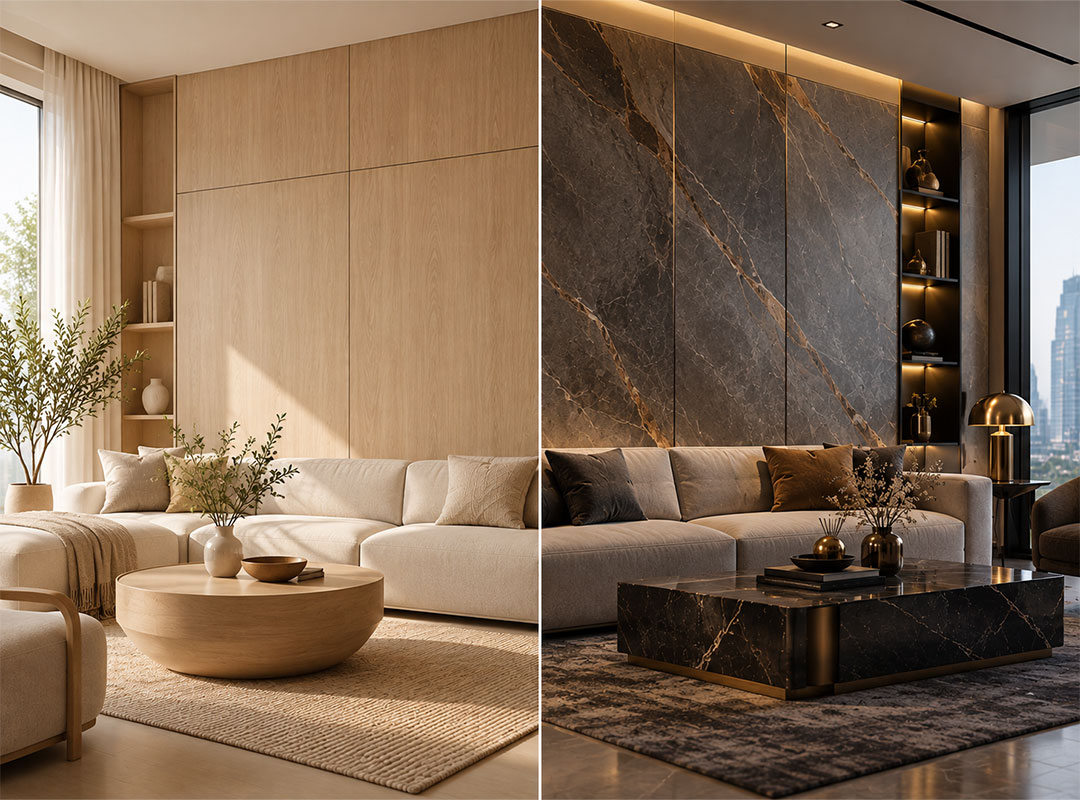
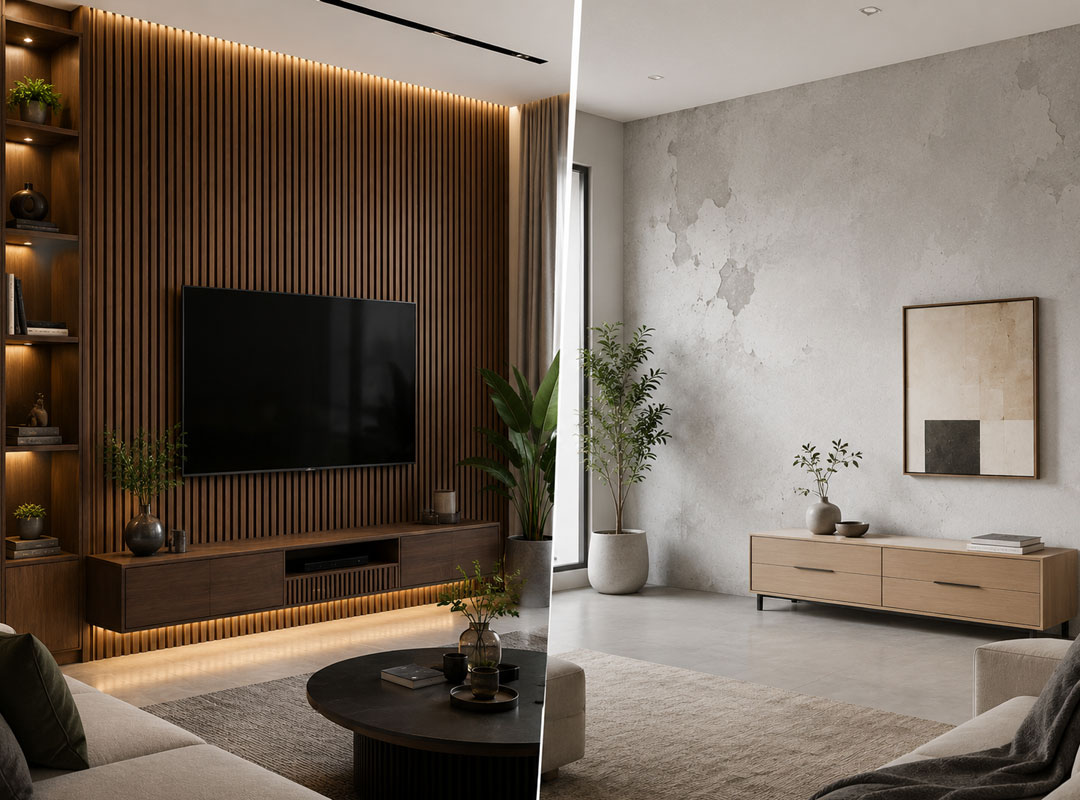
Fire safety in Singapore is not simply a matter of choosing a material advertised as safe. It depends on the product’s composition, tested performance, intended application and the regulations applicable to the building. WPC wall panels combine wood-based material and polymer, but formulations vary between manufacturers. Their material name alone does not establish whether they satisfy the fire safety requirements for a particular installation.
The Singapore Civil Defence Force (SCDF) addresses the use of plastics, composite panels and wall and ceiling finishes through specific provisions in its Fire Code. These requirements distinguish between material types, installation locations and fire performance criteria. Homeowners should therefore examine product-specific evidence before purchasing decorative wall panels, rather than relying on a general claim that a product is fire-resistant or fire-retardant. Wonde® offers wall-panel collections in various finishes, but the suitability of a selected product must be established against its actual technical documentation and intended use.
1. What Is the Exact Material Composition of the Panel?
Start by establishing what the panel contains. WPC typically combines wood fibres or wood flour with a polymer and other formulation ingredients, although the proportions and construction differ between products. These differences can influence how a material behaves when exposed to heat, flames and smoke. Ask the supplier for the technical data sheet identifying the panel’s composition, construction and relevant thicknesses. Do not assume that two products described as wood-plastic composite have identical fire performance. The distinction matters because the SCDF Fire Code addresses plastic wall finishes and composite panels containing plastic under specific provisions, including Clause 3.15.19 and the associated tables. Depending on the product category and application, material thickness can affect the applicable assessment requirements. A panel’s overall thickness is not necessarily the same as the thickness of its plastic component. When assessing WPC wall panels, request clarification on how the product is classified for regulatory purposes instead of relying on the generic WPC label.
2. Which Fire Safety Requirements Apply to the Intended Location?
A product that is acceptable for one application should not automatically be considered suitable for every wall in a home or building. Requirements can differ according to the building’s classification, the location of the proposed installation and whether the material is being used as a surface finish, part of a wall system or external cladding. For fire safety in Singapore, homeowners should establish which provisions apply to the exact project rather than relying on a supplier’s blanket statement that a product complies with local standards. The SCDF Fire Code distinguishes between wall and ceiling surface finishes, internal non-load-bearing walls and composite panels used in different applications. Requirements for external wall cladding should not be confused with those for decorative panels installed on internal walls. Ask your renovation contractor or an appropriately qualified building professional to identify the relevant provisions and any applicable exemptions before ordering materials. Where the application is unclear, obtain clarification before installation. This step is especially important when the proposed work affects common areas, regulated building elements or locations subject to specific fire safety conditions.
3. Is There a Test Report for the Exact Product You Intend to Buy?
A brochure statement, product label or general certificate is not necessarily sufficient evidence of compliance. Ask for the complete fire-test report or supporting technical documentation for the precise panel model under consideration. Check the manufacturer’s name, product identification, material construction, tested thickness, test method, classification and report details. The SCDF Fire Code provisions on materials for construction include specific requirements for materials containing plastics, including relevant criteria for wall and ceiling finishes. The applicable test route depends on the product’s classification, the proposed use and any relevant exceptions. A report for a different product, a thinner sample or another material from the same manufacturer’s range should not automatically be accepted as evidence for the item being purchased. For fire safety in Singapore, the important question is whether the submitted evidence demonstrates the performance required for the actual application. Ask the supplier to explain any differences between the tested sample and the product being quoted, and seek professional confirmation where the relevance of the report is uncertain.
4. Does the Rating Measure Flame Spread or Fire Resistance?
Fire-related terminology can be misleading when different performance measures are treated as interchangeable. Surface flame-spread classification concerns how flames spread over a material’s surface under specified test conditions. Fire resistance, by contrast, concerns the performance of a building element or assembly when exposed to fire for a specified period, such as its ability to maintain integrity or insulation under the relevant test. A surface finish with a particular flame-spread classification does not automatically make the wall behind it fire-resistant. Similarly, a product described as fire-retardant is not necessarily non-combustible or incapable of igniting. The actual meaning of a claim depends on the test performed, the classification achieved and the intended application. When comparing fire-rated wall panels, ask which precise property has been assessed and whether that classification is relevant to the project. The SCDF provisions on the classification of spread of flame provide the official context for surface flame-spread requirements. A clear understanding of these distinctions helps homeowners assess claims accurately without interpreting one test result as proof of every aspect of fire safety.
5. Have Smoke, Toxic Emissions and Flaming Droplets Been Considered?
Flame spread is only one aspect of fire performance. Smoke generation, potentially harmful emissions and flaming droplets can also create hazards during a fire. The applicable criteria depend on the material category and test method, so a single rating should not be assumed to cover all these risks. For example, Table 3.15B of the SCDF Fire Code identifies assessment criteria for plastic wall and ceiling materials relating to toxicity emissions, smoke density and flame spread. Depending on the applicable test route, the criteria reference recognised standards and specific acceptance classifications, including smoke and flaming-droplet classifications under EN 13501-1. These requirements should be checked against the current provisions applicable to the proposed installation, rather than treated as universal ratings for every product. Fire safety in Singapore requires attention to the actual evidence, not just the most prominent figure printed on a product sheet. Ask whether the relevant reports cover the applicable risks and whether their results correspond to the selected material. If the supplier provides only a general description without supporting test information, there is insufficient evidence to conclude that the product meets the requirements for your intended use.
6. Does the Tested Performance Apply to the Complete Installation?
The installed result can differ from what a material test report appears to demonstrate if the product is used in a configuration that has not been assessed. Depending on the product and application, the installation may involve adhesives, mechanical fasteners, backing materials, supporting frames, joints or concealed cavities. These elements can influence the behaviour of the finished system, and a report covering one component does not automatically validate every possible combination. Ask the manufacturer which installation method is covered by its documentation and whether substitutions are permitted. Confirm that the installer will follow the specified fixing system and will not replace tested components with unverified alternatives. This is particularly important when cutting panels around service openings or introducing additional layers that change the original construction. When buying WPC wall panels, homeowners should also clarify whether modifications to the panel or its supporting system affect the relevance of the supplied fire-test evidence. Where the proposed installation differs materially from the tested configuration, obtain appropriate technical advice before proceeding. The aim is to ensure that product claims remain relevant to the finished installation rather than being based solely on an isolated sample.
7. Could the Installation Affect Escape Routes or Existing Fire Safety Provisions?
Before approving a wall finish, check whether its proposed location is permitted and whether the work could interfere with existing fire safety provisions. The SCDF Fire Code’s tables governing plastic wall and ceiling materials and composite panels containing plastic include restrictions on their use in exit staircases and exit passageways. The applicable provisions must be checked for the specific material and installation rather than inferred from permission to use the same material elsewhere. A renovation must also avoid obstructing fire safety equipment, compromising protected building elements or covering components that need to remain accessible. In condominiums, confirm any relevant requirements with the management corporation and establish whether approval is needed before work begins. For more complex applications or situations involving regulated building elements, obtain advice from an appropriately qualified professional who can assess the proposal against current requirements. If you are considering fire-rated wall panels for an area subject to special restrictions, a supplier’s recommendation alone should not determine the final decision. Ask for written confirmation of the proposed use and retain the supporting documentation with the renovation records.
Making an Informed Choice with Wonde®
Selecting a wall finish requires more than comparing colours, textures and prices. Homeowners should verify the material’s composition, identify the applicable fire safety provisions, review product-specific test evidence and confirm that the proposed installation reflects the documented configuration. These checks are particularly important where products contain plastics or are being considered for locations subject to specific building requirements.
Wonde® provides a range of wall-panel finishes suited to different interior design preferences. When exploring its collections, ask for the current technical specifications and any available fire-test documentation for the exact product being considered. Do not assume that one certificate or test result applies to every panel in a collection. A supplier’s general product information should be assessed alongside the requirements of the proposed application, with qualified professional advice obtained where necessary.
Before choosing WPC wall panels, verify the evidence, intended use and installation conditions rather than relying on unqualified fire safety claims. The SCDF Fire Code and applicable professional guidance should inform the decision wherever regulatory requirements arise. For homeowners, this approach provides a more reliable basis for selecting decorative finishes while keeping fire safety, regulatory suitability and responsible renovation planning at the forefront.