Price is often the first factor buyers compare when selecting wall panels. Whether it is for a premium home renovation, luxury condominiums, landed properties, office fit-outs, hotel, retail outlet, or commercial development, lower-priced products can appear to offer immediate cost savings. However, the purchase price represents only a small portion of the total investment. The real cost of a wall panel is determined by its performance throughout its service life, including installation efficiency, maintenance requirements, durability, appearance retention, and replacement frequency.
Many inexpensive wall panels achieve lower prices by compromising on raw material quality, manufacturing precision, protective surface technology, and quality control. These compromises may not be immediately visible when the product is new, but they often become evident after installation through issues such as colour inconsistency, surface damage, loose joints, moisture-related deformation, or reduced structural stability. As a result, property owners frequently spend more on repairs, maintenance, labour, and replacements than they initially saved during purchase.
Professional architects, interior designers, and contractors therefore evaluate wall panels using lifecycle cost rather than purchase price alone. They understand that a premium panel delivering reliable performance for many years is often more economical than repeatedly repairing or replacing cheaper alternatives.
In Singapore, where premium interior finishes are expected across residential and commercial developments, selecting wall panels based solely on purchase price can significantly increase long-term ownership costs.
At Wonde®, every WPC Wall Panel is developed with this long-term approach in mind. From raw material selection and manufacturing precision to surface engineering and quality assurance, every stage is designed to minimise ownership costs while delivering consistent quality across residential, hospitality, retail, and commercial projects.
Understanding these hidden costs helps buyers make informed decisions that protect both their budgets and the long-term quality of their interiors.
1. The Lowest Purchase Price Rarely Delivers the Lowest Overall Cost
Choosing Cheap Wall Panels based solely on their initial price can be misleading because the purchase cost represents only one stage of the product’s lifecycle. Installation labour, maintenance, repairs, cleaning, replacement materials, and business disruption often exceed the original product cost over time. A panel that costs less initially but requires replacement after a few years ultimately becomes more expensive than a premium product designed for long-term durability. Experienced project managers therefore evaluate wall panels based on total ownership cost rather than the invoice value alone, recognising that reliable performance produces greater financial savings throughout the life of the project.
2. Inferior Raw Materials Reduce Product Lifespan
The durability of a wall panel begins with the quality of its raw materials. Low-cost products frequently reduce manufacturing expenses by using inconsistent wood fibres, lower-grade polymers, excessive recycled fillers, or inferior additives. These materials may reduce production costs, but they also affect structural stability, impact resistance, and long-term durability. As the panel ages, weaknesses in the material become increasingly visible through brittleness, reduced strength, or premature deterioration. Premium WPC Wall Panels use carefully controlled material formulations to ensure consistent mechanical performance and greater resistance to long-term environmental stress, making them a more reliable investment.
3. Poor Manufacturing Precision Creates Expensive Installation Problems
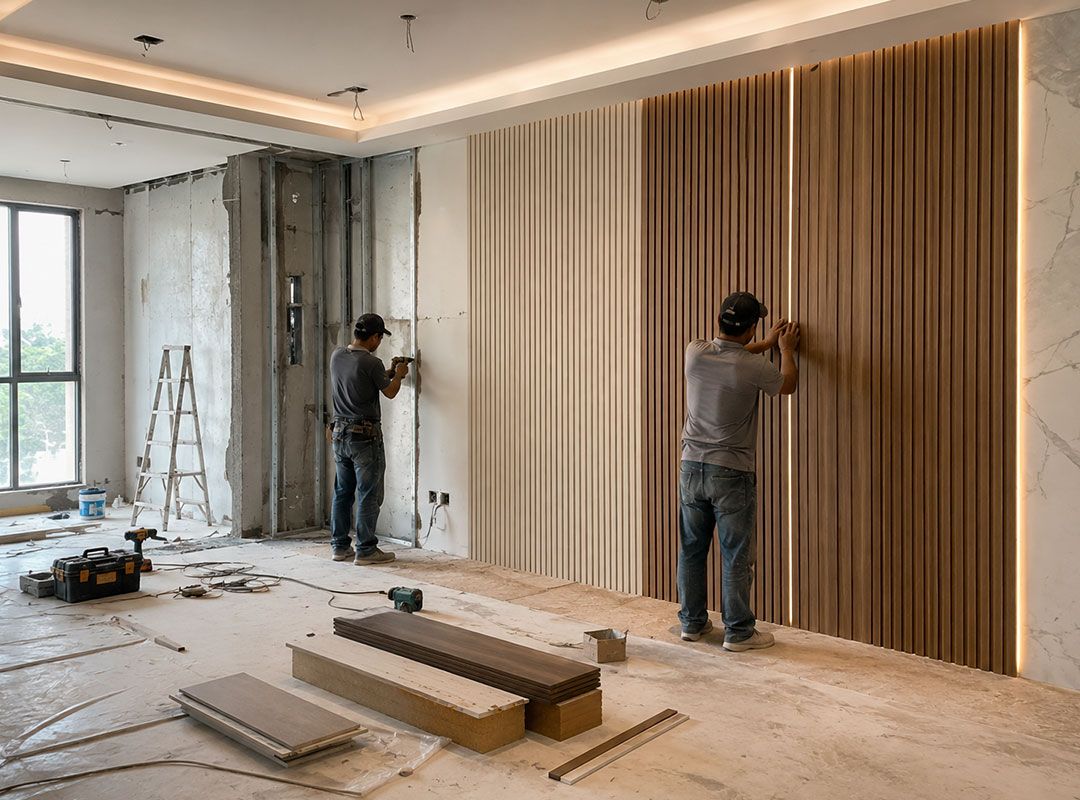
The quality of a wall panel is determined not only by its materials but also by how accurately it is manufactured. Inconsistent dimensions, uneven profiles, and poor calibration create difficulties during installation because panels fail to align properly or require additional adjustments on site. Installers spend more time correcting joints, trimming panels, and compensating for manufacturing defects, increasing labour costs and project duration. What initially appears to be a cheaper product often becomes more expensive because of the additional installation effort required to achieve an acceptable finish. Even dimensional variations of a few millimetres can create cumulative alignment issues across large wall installations.
4. Cheap Surface Finishes Wear Out Faster
The outer decorative surface experiences continuous exposure to cleaning, accidental impacts, furniture movement, and daily contact. Low-cost wall panels often use low-grade decorative laminates, thin protective coatings, or inferior UV-resistant surface layers that wear, scratch, or fade much faster than engineered finishes. Once the decorative layer deteriorates, the panel loses much of its visual appeal, making replacement the only practical solution. Premium Wall Panels incorporate advanced surface technologies that improve scratch resistance, stain resistance, and colour stability, helping interiors maintain their appearance for significantly longer while reducing refurbishment costs.
5. Inconsistent Product Quality Increases Material Waste
Consistency is essential when completing large interior projects. Variations in colour, dimensions, profile geometry, or surface texture between production batches can create noticeable differences across completed walls. Contractors may be forced to reject panels, reorder additional materials, or spend extra time sorting products before installation. These hidden costs increase project expenses while delaying completion schedules. Wonde® applies strict quality control throughout manufacturing to ensure that every production batch delivers consistent dimensions, colour, and finish, allowing architects and installers to achieve seamless results with minimal material waste.
6. Frequent Maintenance Eliminates Initial Savings
One of the most overlooked costs of choosing Cheap Wall Panels is ongoing maintenance. Products manufactured with lower-quality materials or finishes often require more frequent cleaning, repairs, refinishing, or replacement to maintain an acceptable appearance. Commercial spaces such as offices, hotels, retail stores, and restaurants are particularly affected because wall surfaces experience constant use. Every maintenance cycle adds labour costs, replacement materials, and operational disruption. Premium WPC Wall Panels are engineered to minimise these maintenance requirements, reducing long-term operating costs while maintaining a professional appearance throughout their service life.
7. Limited Warranty Often Reflects Lower Product Confidence
A manufacturer’s warranty is more than a marketing document. It reflects confidence in the product’s engineering, manufacturing standards, and expected service life. Many low-cost wall panels offer limited warranty coverage or include exclusions that provide little practical protection against premature defects. If panels begin to deform, discolour, or deteriorate shortly after installation, property owners may bear the full replacement cost. Reputable manufacturers invest in product testing and quality assurance before offering comprehensive warranty support. Wonde® backs its Premium Wall Panels with stringent manufacturing processes designed to deliver consistent long-term performance rather than short-term cost savings.
8. Moisture Damage Can Lead to Premature Replacement
Moisture remains one of the leading causes of interior wall finish failure, particularly in humid regions such as Singapore. Low-cost wall panels often use inferior material formulations or inconsistent manufacturing processes that allow moisture to penetrate the panel over time. This may lead to swelling, warping, joint separation, or surface deterioration, requiring sections of the installation to be replaced. Quality WPC Wall Panels are engineered with carefully balanced polymer formulations and controlled production techniques that improve moisture resistance and dimensional stability, helping maintain their structural integrity even under challenging environmental conditions.
9. Poor Impact Resistance Reduces Service Life
Interior walls are exposed to continuous physical contact from furniture movement, cleaning equipment, luggage, shopping carts, and everyday occupant activity. In commercial environments, these impacts occur much more frequently than in residential spaces. Low-cost panels often crack, dent, or suffer permanent surface damage because of weaker material density or poor structural design. Once damaged, replacing individual panels may be difficult if matching products are no longer available. Premium wall panels are engineered to withstand everyday impacts more effectively, reducing repair frequency and preserving the appearance of the finished interior for many years.
10. Low-Quality Panels Can Delay Construction Schedules
Construction delays often create costs that are significantly higher than the price difference between two wall panel products. Panels that arrive with dimensional inconsistencies, damaged edges, or poor profile accuracy require additional inspection, trimming, and replacement before installation can continue. These delays affect labour productivity, project scheduling, and coordination with other finishing trades. Contractors therefore prefer manufacturers capable of delivering consistently accurate products because reliable installation directly contributes to timely project completion. Investing in high-quality wall panels helps reduce unexpected delays and improves overall project efficiency.
11. Cheap Products Can Increase Long-Term Operating Costs
The financial impact of a wall panel should be evaluated over its entire service life rather than only at the time of purchase. Frequent maintenance, repeated repairs, higher cleaning requirements, replacement materials, and labour costs all contribute to the total cost of ownership. Commercial properties also experience indirect losses when maintenance work disrupts business operations or affects customer experience. Premium WPC Wall Panels reduce these recurring expenses by maintaining their structural integrity, appearance, and performance for significantly longer, making them a more economical solution over time despite a higher initial investment.
12. Why Wonde® Focuses on Long-Term Value Instead of Lowest Price
At Wonde®, product development is based on engineering quality rather than cost reduction alone. Every panel is manufactured using carefully selected raw materials, precision extrusion technology, strict quality control, and advanced surface engineering to deliver consistent durability and appearance. This approach enables Wonde® to produce Premium Wall Panels that reduce maintenance requirements, simplify installation, and maintain their finish across residential, hospitality, retail, and commercial environments. Rather than competing on the lowest purchase price, Wonde® focuses on delivering products that provide greater long-term value throughout their service life.
The true cost of Cheap Wall Panels extends far beyond their purchase price. Lower manufacturing standards, inconsistent raw materials, poor installation accuracy, weaker surface finishes, and higher maintenance requirements often result in significantly greater ownership costs over time. What initially appears to be an economical purchase can ultimately become more expensive through repeated repairs, operational disruptions, and premature replacement.
Professional architects, contractors, and property owners increasingly evaluate wall panels based on lifecycle performance rather than initial cost alone. Factors such as material quality, manufacturing precision, durability, moisture resistance, warranty support, and long-term maintenance all contribute to a product’s real value. Wonde® follows this engineering-led philosophy by manufacturing WPC Wall Panels that prioritise reliability, consistency, and long-term performance. By investing in quality instead of simply choosing the lowest-priced option, property owners can reduce maintenance costs, improve project outcomes, and create interiors that continue performing well for years after installation. Investing in quality is particularly important for premium residential interiors, where luxury feature walls are expected to maintain their appearance for years.