The difference between a landed house and a condominium is not simply the amount of space available. The architecture of each property creates different wall proportions, circulation patterns, structural conditions and opportunities for interior finishes. A condominium is generally contained within a defined residential unit, with structural elements, windows, services and building systems already established. A landed house can extend across several floors and may include taller walls, staircases, larger entrance areas and more varied room dimensions.
These differences directly influence how wall surfaces should be designed. For homeowners considering wall panels in Singapore, the choice should begin with the architecture of the property rather than the finish alone. A compact condominium may have a feature wall interrupted by cabinetry and electrical points, while a landed house may offer a tall foyer wall or staircase extending across multiple levels. This is why condo interior design and landed house interior design in Singapore cannot simply follow the same approach. The panel size, texture, orientation and coverage need to respond to the scale and structure of the space.
1. Condominium Interiors Need Precise Wall Planning
Condominium walls often have several functions within a limited area. A living-room wall may accommodate a television, storage, lighting, electrical points and decorative elements at the same time. This reduces the amount of uninterrupted surface available for a panel installation. Careful condo interior design therefore starts by identifying the sections of the wall that can carry a finish without competing with the existing architecture. Properly planned wall panels in Singapore can turn a television wall, dining backdrop or entrance surface into a clear focal element while keeping the rest of the room visually controlled.
2. Landed Homes Offer Larger Opportunities for Wall Panels
Landed properties can provide a wider variety of wall conditions, from compact rooms to large living areas, entrance foyers and tall staircases. This gives landed house interior design in Singapore greater scope to use wall panels at an architectural scale. A stone-inspired surface can define a substantial entrance wall, while a linear wood grain or fluted treatment can emphasise a tall staircase. The greater wall area does not mean that every surface needs a decorative finish. It means there is more opportunity to select specific walls where the panel can contribute to the architecture.
3. Panel Dimensions Affect the Number of Visible Joints
Panel dimensions should be considered at the planning stage because they influence the continuity of the finished wall. The Wonde® WPC Wall Panel is available in a 1100 × 2800 mm format, with custom lengths also available in a 1100 mm width. The product is offered in 5 mm and 8 mm thicknesses. A large-format panel can be particularly useful where the dimensions of the wall allow a cleaner layout with fewer visible breaks. For wall panels in Singapore, the final arrangement should be based on the measured wall, the position of doors and cabinetry, and the desired joint pattern rather than simply using the maximum available panel size.
4. Fluted Panels Depend on Proportion and Direction
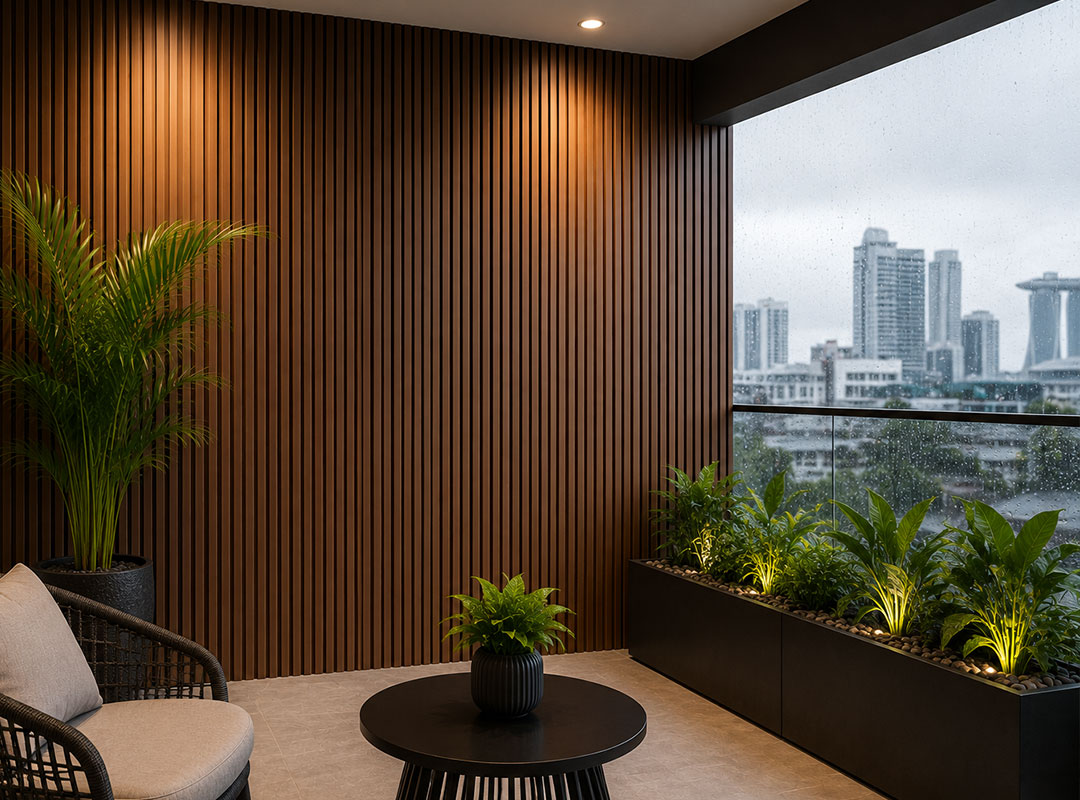
Fluted panels create a repeated linear rhythm through their grooves, making them particularly sensitive to wall proportions. A vertical fluted finish can emphasise height and create depth as light falls across the grooves. In a condominium, it can define an entrance, media wall or dining backdrop without requiring several additional decorative elements. In landed house interior design in Singapore, the same treatment can be extended along a staircase or used on a tall foyer wall where the vertical pattern reinforces the architecture. Wonde®’s fluted panels are designed around this linear surface character, making them suitable for interiors where texture and direction are important.
5. Staircase Walls Can Become Architectural Features
A staircase wall is viewed from multiple positions rather than from one fixed point. In a multi-storey landed house, it may be visible from the entrance as well as from upper landings, which gives it a much larger visual role than an ordinary room wall. This creates an opportunity for landed house interior design in Singapore to use a continuous panel treatment to connect different floors. Wood grain and fluted finishes can work particularly well because their linear direction naturally complements vertical circulation. The panel becomes part of the movement through the house instead of being limited to a single room.
6. Stone-Inspired Panels Need Sufficient Visual Space
Stone-inspired finishes often contain veining, tonal movement and surface variation that require enough wall area to be appreciated. A strongly patterned marble-inspired panel can create an effective focal point behind a television, within an entrance or across a dining wall. In a condominium, keeping the application to a defined section can prevent the pattern from competing with other elements in the room. Larger landed-house surfaces can accommodate the same material across a wider area because the architecture provides greater visual distance. Wonde®’s Stone Series includes marble and other stone-inspired designs that allow designers to introduce this material character through an engineered panel system.
7. Wood Grain Panels Can Connect Furniture and Architecture
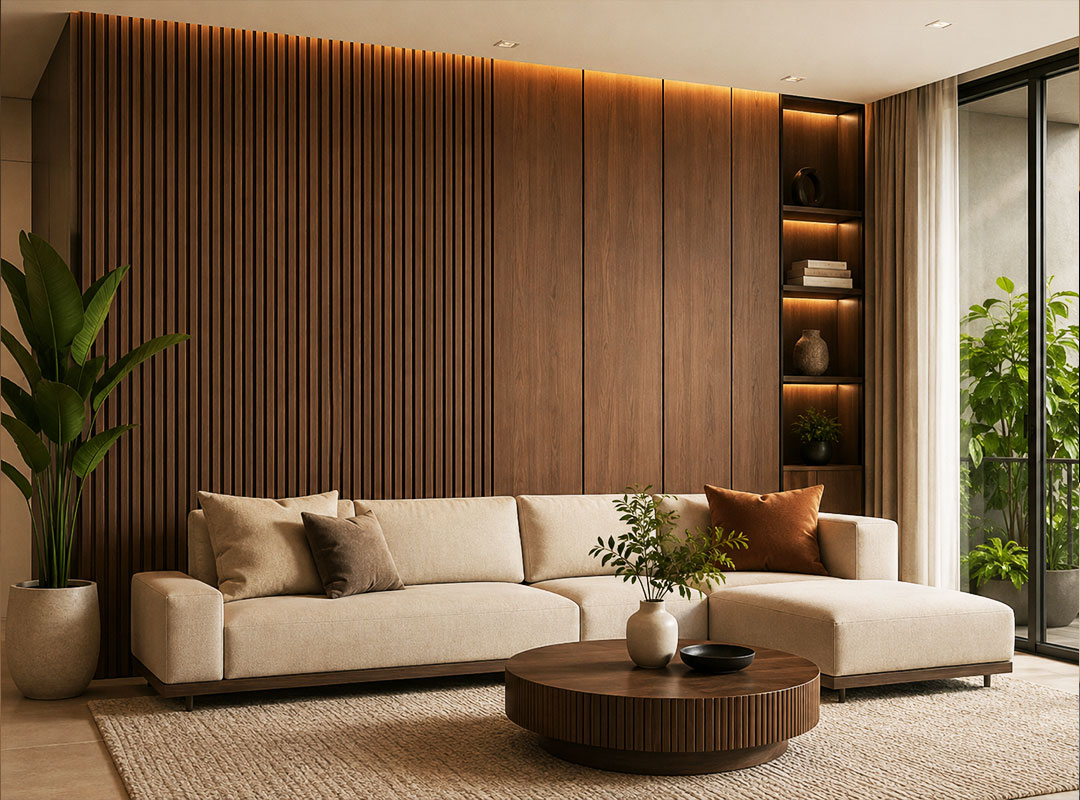
Wood-inspired finishes have a strong directional quality that can be coordinated with cabinetry, shelving and furniture. In condo interior design, a wood grain wall can make a television unit, storage system and wall surface appear more integrated because the materials share a consistent visual language. In a landed home, the same finish can be carried selectively from the entrance towards a staircase or landing to establish a connection between floors. Wonde®’s Wood Grain Series includes several timber-inspired finishes designed to bring the texture and visual character of wood into contemporary interiors.
8. Large-Format Panels Can Create a More Continuous Surface
A wall with too many visible panel joints can appear fragmented, especially when the design is intended to resemble one continuous architectural surface. This is particularly noticeable on large walls in landed homes. Larger panel formats can reduce unnecessary divisions when the wall dimensions and installation conditions permit. The Wonde® WPC Wall Panel’s 1100 × 2800 mm format provides a substantial surface area for this type of application. For wall panels in Singapore, the advantage comes from planning the entire wall as one composition, including joints, corners, cabinetry and transitions.
9. Metallic Finishes Need to Be Designed Around Light
Metallic surfaces interact strongly with lighting, which can change how their colour, sheen and texture appear throughout the day. Wonde®’s Metallic Series includes brushed, polished and textured metal-inspired finishes and is available in large-format panels. Such finishes can create a striking feature in a condominium when positioned carefully in relation to windows and artificial lighting. In a landed house, the effect can be more pronounced on large entrance walls or staircases where light enters from several directions. When selecting wall panels in Singapore, metallic surfaces should therefore be considered alongside the lighting plan rather than evaluated from a sample alone.
10. Wall Panels Can Create Zones Without Physical Partitions
Open-plan interiors do not always require additional walls to create visual separation. A change in wall finish can define different functions while keeping the floor plan open. In a condominium, a panelled surface can distinguish the dining area from the living area or establish a clear entrance zone without reducing usable space. This can be especially effective in condo interior design, where several activities may share one room. In a landed property, panel treatments can similarly distinguish formal and family spaces, entrances and living areas, or transitional spaces between floors.
11. Curved Surfaces Require Flexible Materials
Contemporary residential interiors increasingly incorporate curved corners, rounded partitions and continuous built-in forms. These applications can be difficult to execute with rigid finishing materials. Wonde® offers panel systems designed for bendable applications, while its Metallic Series can be shaped through controlled thermoforming for suitable curved installations. This gives wall panels in Singapore greater flexibility where the architecture includes rounded forms instead of conventional flat walls. The required curve, material specification and installation method still need to be assessed before the panel is selected.
12. The Existing Wall Condition Affects the Final Result
A wall panel does not hide every underlying construction issue. Uneven surfaces, existing electrical points, corners, joinery and changes in wall alignment can all influence the finished installation. This is relevant to both new and renovation projects. In a condominium, the panel may need to integrate around existing cabinetry and services. In a landed property, several floors may contain different wall conditions because of previous renovation work. Wonde® also provides aluminium alloy accessories to support panel installation and finishing. Proper detailing at joints, corners and edges is therefore essential to achieving a refined result.
13. Moisture Exposure Should Influence Material Selection
Different rooms place different demands on interior wall materials. A bedroom and living room generally have different moisture conditions from areas near kitchens, vanities and bathroom entrances. Wonde®’s WPC Wall Panel is designed with waterproof and moisture-resistant characteristics, making material performance relevant when selecting panels for specific interior applications. The intended location still needs to be considered carefully, particularly where a wall may encounter direct water rather than normal ambient humidity. Choosing wall panels in Singapore should therefore involve both visual and technical evaluation.
14. Fire Performance Is an Important Specification
Interior wall finishes also need to satisfy applicable fire-safety requirements. Singapore’s fire regulations contain specific provisions covering wall finishes and composite panels, with requirements depending on the material and application. Wonde®’s WPC Wall Panel is specified with a B1 fire rating. The exact product specification, substrate and installation system should nevertheless be assessed according to the requirements applicable to the project. This is an essential part of responsible material selection and applies equally to condo interior design and landed residential projects.
15. Renovation Conditions Differ Between Property Types
The renovation framework is another factor that separates condominiums from landed homes. Singapore’s Urban Redevelopment Authority distinguishes between strata-titled and land-titled residential properties, with different requirements applying to certain alterations. Internal works in strata-titled residential units can generally proceed without planning permission when specified conditions are met, while landed properties are subject to a separate framework for additions and alterations. This means the interior concept should be developed with the permissible scope of work understood from the beginning. A wall-panel solution can be especially practical when the design objective is to significantly change the appearance of an existing wall without undertaking major structural changes.
16. One Property Does Not Need One Panel Finish
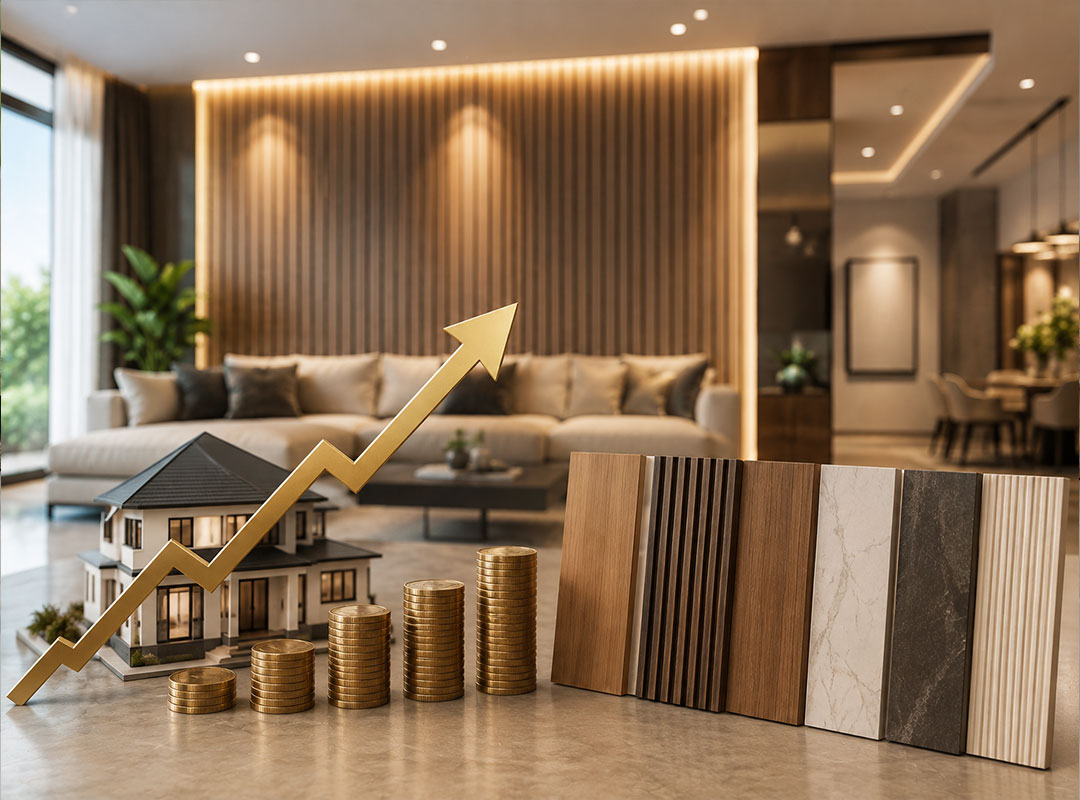
A cohesive interior does not require the same panel finish throughout the home. Different panel types can perform different architectural roles. Stone can create a substantial formal feature, wood grain can introduce warmth, fluted panels can reinforce vertical movement, and metallic surfaces can create a more contemporary focal point. Wonde® offers Stone, Wood Grain, Metallic, Fluted, Solid Colour and other decorative wall-panel options that can be selected according to the character of each space. This makes wall panels in Singapore more versatile when the finishes are used selectively rather than repeated without purpose.
17. Viewing Distance Changes How a Pattern Is Perceived
The distance from which a wall is normally viewed can affect the appropriate surface pattern. A compact condominium feature wall is often experienced from a relatively close distance, allowing finer textures and smaller details to remain visible. A tall landed-house foyer or staircase may be viewed from much farther away, making broader patterns and stronger surface definition more effective. This is another reason landed house interior design in Singapore should take the scale of the entire wall into account rather than selecting finishes purely from small product samples.
18. The Wall Should Determine the Panel, Not the Other Way Around
The most useful way to approach condo interior design or landed house interior design in Singapore is to begin with the physical wall. Its width, height, openings, lighting, viewing distance, furniture, moisture exposure and installation conditions should all be understood before a panel is chosen.
For wall panels in Singapore, this approach creates a more precise design process. A stone panel may be appropriate for a broad entrance wall, while a fluted panel may work better beside a staircase and a wood grain finish may suit a media wall integrated with cabinetry. The product is selected according to the role of the wall, not simply because the finish looks attractive in isolation.
Landed and condominium properties require different approaches to wall-panel design because their architecture creates different wall conditions. A condominium usually demands precision. Available surfaces are often interrupted by cabinetry, structural elements, services and openings, so panel placement needs to be carefully controlled. A landed property offers more opportunities for larger and taller applications, particularly around staircases, foyers and multi-level circulation areas.
For homeowners and designers considering wall panels in Singapore, the right decision should therefore be based on more than colour or texture. Panel format, wall proportion, viewing distance, lighting, installation details, moisture exposure and applicable technical requirements all influence the final result. Wonde®’s range of Stone, Wood Grain, Metallic, Fluted, Solid Colour and other decorative wall panels provides different surface options for these applications. Used selectively and at the correct scale, wall panels can do more than decorate a wall. They can define a space, connect different areas of a home and become an integral part of its architectural character.